
A federal judge in New York has dismissed a product liability lawsuit against Tesla, ruling that the driver failed to provide sufficient evidence that a touchscreen defect caused her accident. The court granted summary judgment in favor of Tesla after determining that the plaintiff did not present expert testimony to support her claims.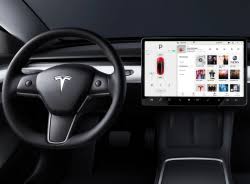
U.S. District Judge Nelson Roman concluded that allegations involving complex vehicle software, electronic interfaces, and integrated control systems require qualified expert analysis. In this case, the plaintiff relied solely on her own statements rather than technical or expert evidence, which the court found inadequate to establish a defect or causation.
The lawsuit was brought by Robyn Nicole Wilson-Wolf, who claimed that a malfunctioning touchscreen in her 2021 Tesla Model 3 caused her to lose control of the vehicle. She asserted claims based on manufacturing defect, design defect, failure to warn, negligence, and breach of the implied warranty of merchantability. However, the court found that she failed to support any of these theories with expert testimony.
As a result, Judge Roman ruled that Wilson-Wolf did not raise a genuine dispute of material fact, a necessary requirement to proceed to trial. Tesla was therefore entitled to judgment as a matter of law.
Details of the accident
The crash occurred on March 12, 2022, when Wilson-Wolf was driving on Interstate 87 in Yonkers, New York. According to the police accident report, road conditions at the time were snowy and icy. The investigating officer documented that the vehicle hydroplaned, hit a center median, crossed multiple lanes of traffic, and struck a second median before coming to a stop.
The officer concluded that unsafe speed and an improper lane change contributed to the accident. While Wilson-Wolf acknowledged the presence of winter weather conditions, she disputed the officer’s findings, arguing that the report failed to consider a potential touchscreen malfunction.
She claimed that the investigating officer was not present at the moment of the crash and did not examine the vehicle for software-related issues. Wilson-Wolf alleged that the touchscreen “froze,” went black, and caused all alerts to stop functioning, which she said led to the vehicle not operating properly.
Tesla’s response
Tesla countered that a review of vehicle diagnostic data from the time of the crash showed no evidence that the touchscreen froze or blacked out. The company also argued that even if the touchscreen had malfunctioned, the driver would still have full mechanical control over steering, braking, and acceleration.
Wilson-Wolf challenged the reliability of Tesla’s diagnostic data, suggesting it may not capture all malfunctions and that resets performed before the crash could have erased key information. She acknowledged that primary driving controls remained available but argued that secondary features—such as windshield wipers, turn signals, alerts, and the speed display—were unavailable, impairing her ability to respond to dangerous conditions.
Tesla also pointed to both vehicle data and the police report indicating that hydroplaning occurred prior to the collision. Wilson-Wolf argued that hydroplaning did not eliminate Tesla’s responsibility and claimed the loss of touchscreen-controlled features made recovery more difficult.
Court’s ruling
Judge Roman emphasized that Wilson-Wolf needed to demonstrate both a specific defect in the touchscreen and a direct causal link between the alleged defect and the accident. The court found she failed to do either.
The judge noted that issues involving software performance, electronic systems, and vehicle dynamics under varying weather conditions are beyond the understanding of ordinary jurors and cannot be proven through lay testimony alone. Wilson-Wolf did not identify an expert, propose a safer alternative design, address risk–utility considerations, or rule out other non-defect causes of the crash. She also failed to show that additional warnings would have prevented the accident.
Because no genuine dispute of material fact existed, the court granted summary judgment to Tesla and denied Wilson-Wolf’s request for further discovery.